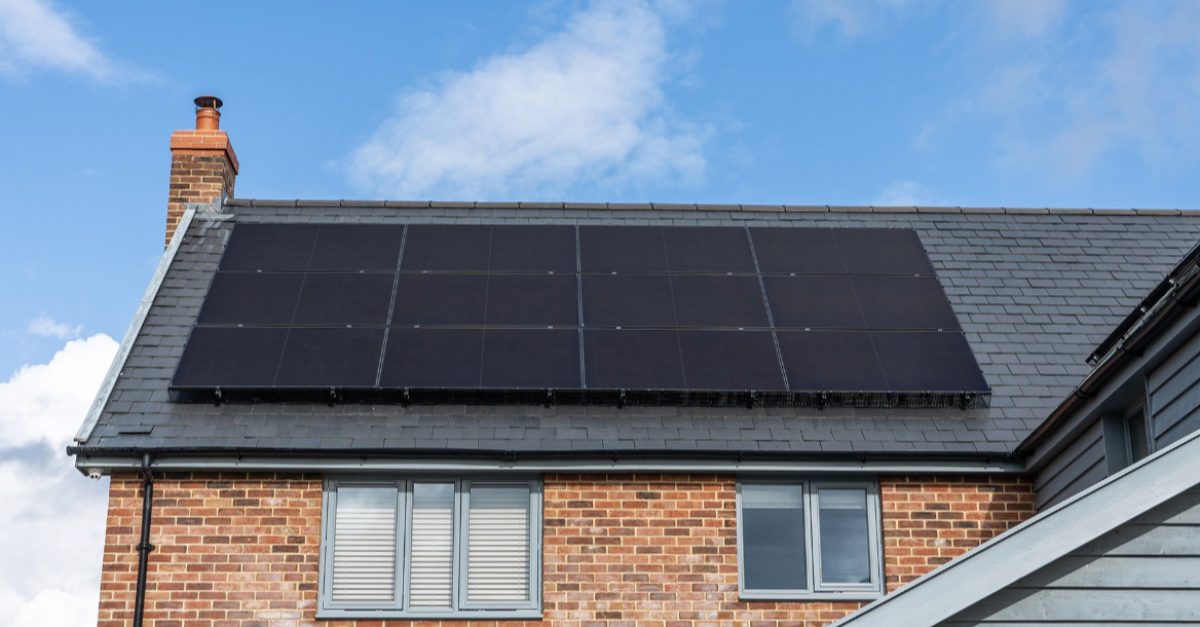
A 10 solar panel system is one of the most common solar setups for Irish homes. Understanding the full 10 solar panels and battery cost upfront makes it easier to plan your budget before requesting an installer’s quote. A system of this size can suit an average household with moderate electricity demand, while adding a battery can help you use more of your own daytime generation in the evening.
This guide covers the price of 10 solar panels in Ireland, the cost of adding a battery, expected annual output and whether 10 panels are enough for your house. It also updates the SEAI grant section to reflect the current 2026 rules, including the separate battery grant that was not included in older versions of this information.
10 Solar Panels — How Many kW Is That?
Most panels installed on Irish roofs today are rated at approximately 450W to 470W. Using a typical 460W panel, a 10 solar panel system works out at roughly 4.6kWp. The term kWp means kilowatt-peak and describes the maximum rated output of the complete solar array under standard test conditions.
A 4.6kWp system is one of the most popular sizes for an average Irish home. It sits between a compact starter system and the larger arrays chosen by households with an electric vehicle, heat pump or consistently high electricity consumption. Ten panels can offer a useful balance between roof space, upfront cost and expected annual generation.
However, the number of panels should not be selected by roof size alone. Your annual electricity consumption, daytime usage, shading, roof direction and future plans all affect the best system design. A household that plans to add an EV charger may need more capacity than a home with similar floor space but lower electricity demand.
Price of 10 Solar Panels in Ireland
Based on typical Irish market pricing, the average cost of 10 solar panels falls between €7,000 and €8,500 before any SEAI grant is applied. This estimated 10 solar panel cost normally covers the panels, inverter, mounting system, cabling, labour, commissioning and standard SEAI compliance paperwork.
The cost to install 10 solar panels can change depending on roof pitch, roof covering, access for scaffolding and whether the array fits on one roof face. If the panels need to be divided across two roof faces, the installer may need additional cabling, optimisers or a more detailed inverter design. Shading from trees, chimneys or nearby buildings can also affect the final design and expected generation.
When comparing quotes, check that every installer is pricing the same scope of work. The quotation should identify the panel model and wattage, inverter brand, mounting equipment, annual generation estimate, warranties and installation timeline. It should also state whether scaffolding, monitoring, electrical certification, ESB Networks paperwork, post-works BER arrangements and final commissioning are included.
Do not compare a complete installed system with a stripped-back hardware price. A low initial figure may exclude scaffolding, monitoring or other necessary work and then add those costs later. An itemised quotation gives you a clearer view of the genuine cost of installing 10 solar panels.
10 Solar Panels and Battery Cost
Adding battery storage is one of the most common upgrades chosen with a 10-panel solar system. Solar panels produce most of their electricity during daylight hours, while many homes use more electricity in the late afternoon and evening. A battery stores some surplus generation during the day and makes it available later.
A typical 5kWh to 10kWh home battery may add approximately €1,500 to €3,500 to the total price. The exact battery cost depends on usable capacity, brand, warranty, inverter compatibility, monitoring features and whether emergency backup is required. A battery with backup capability may need additional equipment and installation work.
On this basis, the combined 10 solar panels and battery cost may be approximately €8,500 to €12,000 before grants. This is an indicative range rather than a fixed quote. Ask whether the advertised battery capacity is total or usable capacity, what the performance warranty covers, how many charge cycles are included and whether the battery can be expanded later.
A battery is usually more valuable in a household with high evening electricity use. It can help you consume more of your own solar energy instead of exporting it during the day and buying electricity from the grid later at the retail rate. It may be less financially attractive where most electricity is already used during daylight hours or annual consumption is very low.
The battery does not produce extra electricity. It shifts some solar energy from one time of day to another, and a small amount of energy is lost during charging and discharging. The correct capacity should therefore be based on your real usage pattern rather than simply choosing the largest battery available.

SEAI Grant Savings on a 10 Solar Panel System
The older statement that the SEAI Solar PV grant can reduce the 10 solar panel price by up to €2,100 is out of date for 2026. The current standard domestic grant is calculated according to the solar PV system size and is capped at 4kWp.
Under the standard SEAI calculation, the grant is €700 per kWp for the first 2kWp, giving up to €1,400. An additional €200 is available for each extra kWp between 2kWp and 4kWp. The maximum standard Solar PV grant is €1,800.
A 10-panel system using 460W panels is approximately 4.6kWp. Because the standard grant calculation stops at 4kWp, the solar PV grant does not increase for the extra 0.6kWp above that limit. Subject to approval and the scheme conditions, a standard eligible 10-panel system may therefore qualify for the maximum solar grant of €1,800.
The 2026 rules also provide a separate flat-rate battery grant of €600 for an eligible home battery rated at 5kWh or larger. Batteries below 5kWh are not eligible for this battery grant. This means the maximum standard support for eligible solar PV and battery work can be up to €2,400 in total: €1,800 for solar PV and €600 for the battery.
You must apply to SEAI and receive a Letter of Offer before any installation work begins. The grant is paid after the works are completed and the required documentation is accepted. The installation normally must be completed within eight months of the grant offer. The property must have an MPRN and, under the updated 2026 rule, must have been built and occupied before 2025. Previous funding at the same MPRN may affect eligibility.
The work must be completed by an SEAI-registered solar PV company and must meet the relevant technical and electrical requirements. A post-works BER assessment is required for grant drawdown where solar PV is present.
Enhanced support is available for certain homeowners receiving qualifying Department of Social Protection payments. Eligible applicants may receive up to €8,400 for solar PV up to 4kWp and a further €600 for a battery of 5kWh or more, giving a possible combined total of €9,000. This enhanced amount is not available to every homeowner, so check the exact qualifying payment and property conditions before using it in your budget.
10 Solar Panels Output: What to Expect
Once you know the cost for 10 solar panels, the next question is performance. Based on typical Irish solar conditions, a 10-panel system rated at approximately 4.6kWp may generate roughly 3,900 to 4,200kWh per year. That works out at around 10 to 12kWh per day when averaged across the year.
The daily figure changes significantly by season. During the brighter months from May to August, production can reach approximately 16 to 18kWh on a clear day. In spring and autumn, daily output commonly sits between 7 and 11kWh. During the shorter winter period from November to February, output may fall to roughly 3 to 5kWh per day.
These figures are planning estimates rather than guarantees. Your actual 10 solar panels output depends on roof orientation, pitch, shading, local weather, panel temperature, inverter losses and system availability. A south-facing roof with no meaningful obstructions will generally perform towards the higher end of the range. East- and west-facing roofs can still work well, but generation is spread differently across the day.
A battery can improve how much of the generated electricity your home uses, but it does not change the amount of sunlight available or remove seasonal variation. Using appliances during daylight hours and charging an EV when solar production is available can improve self-consumption.
Is 10 Solar Panels Enough for a House?
For an average three-bedroom Irish home, 10 panels sit at the lower end of the typical recommendation. Many homes of this size use a system of around 10 to 14 panels to cover a meaningful share of annual electricity demand. A 10-panel system can be a balanced choice for a household with moderate consumption and a suitable roof.
If your household runs an EV charger, heat pump, electric shower or several high-use appliances, you may want to consider 12 to 14 panels instead. Future electricity use should also be considered. Installing a system based only on today’s consumption may leave it undersized after an EV or heat pump is added.
The best approach is to review your annual electricity consumption in kWh from recent bills. Compare it with the installer’s expected generation estimate and ask how much of that electricity you are likely to use directly, store in a battery or export to the grid. A site survey can also identify shading and roof limitations that are not obvious from online images.
What Makes a Top-Tier Solar Panel?
You do not need to follow a “top 10 solar panels in the world” ranking to choose a reliable system for Ireland. What matters is whether the equipment suits the roof, local weather and your household’s energy needs.
High-efficiency monocrystalline cell technology can help when roof space is limited. A strong temperature coefficient is useful because panel efficiency changes with temperature. A robust manufacturer warranty, product warranty and performance warranty are also important for a long-term installation. You should compare the warranty conditions rather than relying only on a brand name.
The inverter is equally important because it converts the panels’ DC electricity into usable AC electricity for the home. A quality inverter should offer suitable capacity, monitoring, safety features and compatibility with the proposed battery. LVP Renewables states that it installs premium-tier panels from established manufacturers such as Jinko Solar alongside inverters from brands such as Solis. Customers should request the exact model numbers, warranties and performance details in writing.
Get an Accurate 10 Solar Panels and Battery Cost Quote
The figures above are a solid planning guide, but every roof and household uses electricity differently. LVP Renewables offers a free, no-obligation site survey to provide an accurate 10 solar panels and battery cost based on your roof, usage pattern and SEAI grant eligibility. The company states that it has completed more than 5,000 installations and has over 40 years of renewable energy experience; ask for a written scope of work and itemised quote before making a decision.
Your quote should show the price before grant, estimated grant amount, final balance, solar system size, battery capacity, expected annual generation, warranties, monitoring equipment and any optional extras. Confirm that the installer is SEAI registered and that the application is submitted before work begins.
Get in touch with LVP Renewables for a transparent, itemised quote with no hidden costs and no obligation.
FAQs
What is the average cost of 10 solar panels in Ireland?
The average indicative cost of 10 solar panels in Ireland is approximately €7,000 to €8,500 before the SEAI grant. This normally covers panels, inverter and full standard installation, although roof access and equipment specifications can change the final price.
What is the average cost of 10 solar panels and battery together?
The combined average 10 solar panels and battery cost is approximately €8,500 to €12,000 before grants, depending on battery capacity, brand, warranty and installation requirements.
How much SEAI grant can a 10-panel system receive?
A standard eligible 10-panel system of approximately 4.6kWp may qualify for the maximum standard Solar PV grant of €1,800 because the grant is capped at 4kWp. An eligible battery of 5kWh or larger may qualify for an additional €600.
Does the SEAI grant cover the battery?
Yes. Under the current battery grant rules, eligible home batteries of 5kWh or larger may receive a flat-rate €600 grant. Batteries below 5kWh do not qualify for this grant.
Is 10 solar panels enough for a house?
For an average three-bedroom home with moderate electricity use, 10 panels can be a suitable starting point. Homes with an EV charger, heat pump or high consumption may benefit from 12 to 14 panels.
How much output can I expect from a 10 solar panel system?
A 10-panel system rated at approximately 4.6kWp may generate around 3,900 to 4,200kWh per year, or roughly 10 to 12kWh per day on average. Summer output may reach 16 to 18kWh on a clear day, while winter output may fall to approximately 3 to 5kWh.