For Irish homeowners considering a heating upgrade, an air-to-water heat pump and thermodynamic solar panels can both use heat from the surrounding environment. But they are not interchangeable products. A conventional air-to-water heating system is generally designed to provide space heating and domestic hot water. A domestic thermodynamic panel system is usually focused on heating the hot-water cylinder. Some product configurations may offer more, so it is important to check the system’s documented output and intended use.
The right comparison depends on what you want to replace. If your goal is to heat every room and supply hot water, compare whole-home systems. If you mainly want to reduce the energy used for showers, baths and taps, a hot water only option may be relevant. This guide explains what each technology does, what it may cost to run, and which Irish homes are more likely to suit each one.
What is an air-to-water heat pump?
An air-to-water heat pump takes heat from outdoor air and transfers it to water for a home’s heating system. It normally supplies radiators or underfloor heating and heats a hot-water cylinder. SEAI describes air-source heat pumps as the most common type of heat pump in Ireland. Unlike a ground-source system, an air-source unit does not need underground collector pipework.
How does air-to-water heating work?
A fan draws outdoor air across a heat exchanger containing refrigerant. The refrigerant absorbs heat and evaporates. A compressor raises its pressure and temperature, and another heat exchanger transfers that heat to water in the home’s heating circuit. The refrigerant then repeats the cycle. Electricity runs the compressor, fan and controls; the system moves environmental heat rather than creating all its heat through direct electric resistance.
The amount of electricity needed depends on conditions such as outdoor temperature, the water temperature the home requires and the system design. Heat pumps generally work more efficiently when they can deliver heat at lower water temperatures. Good insulation, suitable radiators or underfloor heating, and correct system sizing therefore matter.
What are thermodynamic solar panels?
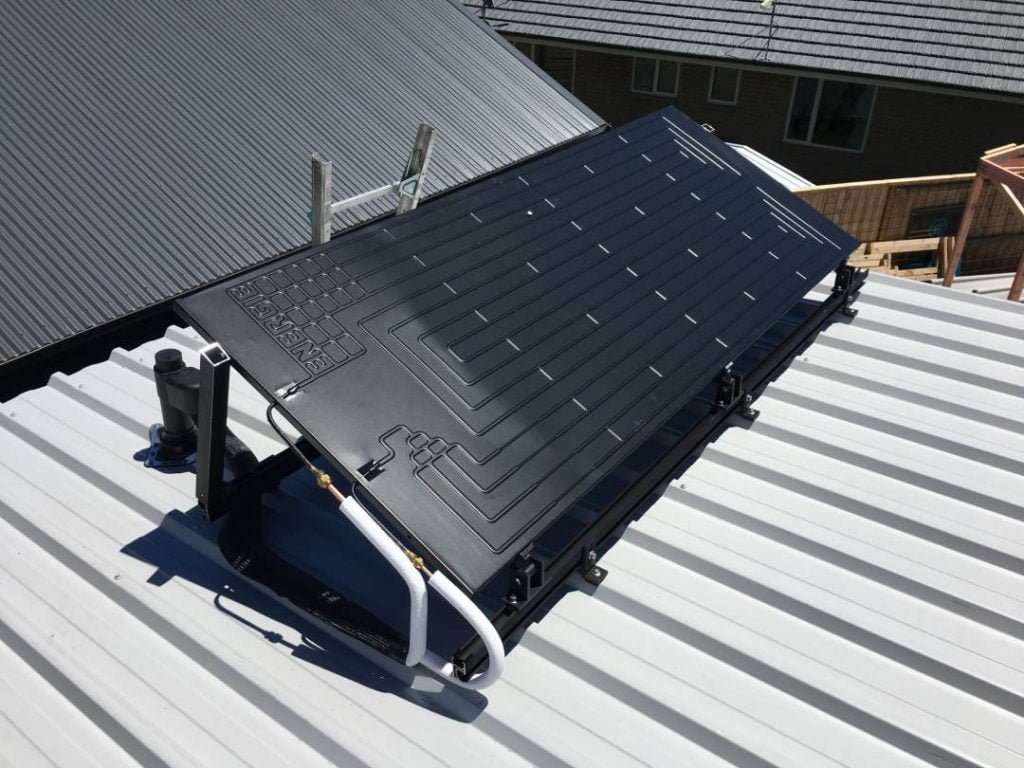
Thermodynamic solar panels are outdoor heat collectors connected to a heat-pump circuit. Refrigerant absorbs low-grade heat at the panel and is compressed so that its temperature rises. The system then transfers heat to water, typically in a domestic hot-water cylinder. LVP Renewables describes its domestic thermodynamic product as a hot-water solution that can draw heat from its surroundings in different weather conditions.
Despite the name, these panels are not the same as solar photovoltaic (PV) panels. PV modules generate electricity from light. A thermodynamic panel is part of a heat-pump system and uses electricity to run a compressor. Nor is it identical to a conventional solar-thermal collector, which captures solar radiation and transfers that heat to water. SEAI distinguishes electricity-generating PV from solar-thermal collectors used for hot water.
How do thermodynamic solar panels work in Irish weather?
Because the panel is acting as a heat exchanger in a heat-pump cycle, direct sunshine is not its only possible heat source. The compressor still needs electricity, and output and efficiency vary with the conditions and the design. “Works in cloudy weather” should not be read as “runs without electricity” or “delivers the same performance in every season.” Ask for product-specific performance information, expected electricity use and the system’s backup arrangements.
LVP also describes a Solar Block configuration that can be designed for domestic hot water and central heating. That is a specific product configuration, not a reason to assume every thermodynamic panel package can heat a whole home. Confirm in writing whether a quoted system is designed and sized for space heating, hot water, or both.
Air-to-water heat pump vs thermodynamic solar panels: key differences
The heat pump’s job
A standard air-to-water heat pump is intended to supply the home’s space-heating circuit as well as domestic hot water. SEAI says a heat-pump installation is designed to provide all space heating and at least 80%—usually all—of a home’s hot water, subject to the design.
A typical domestic thermodynamic panel package is primarily a hot-water system. It can reduce the energy needed to heat a cylinder, but it will not automatically replace a boiler or heat a home’s radiators. Check the exact specification, particularly if a supplier proposes a central-heating configuration.
Efficiency and electricity use
Both systems use electricity and transfer heat from the environment. Neither provides cost-free heat. A useful comparison looks at seasonal performance rather than relying only on a headline or laboratory coefficient of performance (COP). It should also use the same output: compare the cost to provide the same amount of useful heat, and distinguish cylinder hot water from whole-home heating.
For a heat pump, electricity use is influenced by the home’s annual heat demand, its seasonal efficiency and the required flow temperature. For a thermodynamic system, compare the electricity used for hot water with the current immersion, boiler or other water-heating method. Your electricity tariff, hot-water use and any backup heating will affect the result. Ask for an estimate based on your own household rather than relying on a universal annual saving figure.
Installation and space
An air-to-water system needs a suitable location for the outdoor unit, indoor equipment and hot-water cylinder. Its design may require changes to radiators, pipework, controls or electrical supply. The installer should assess room-by-room heat loss and determine whether existing emitters can meet demand at the proposed water temperature.
Thermodynamic panels may need less external collector area than a larger PV array, but the installation still requires a suitable roof or wall location, pipework, a compatible cylinder and access for servicing. Check planning requirements, the route for pipework and any constraints imposed by the building’s layout. For either option, obtain a written scope that names included equipment, commissioning, warranties and after-sales support.
Installation costs and running costs in Ireland
There is no meaningful single price that applies to every home. An air-to-water heat pump can involve a full heating-system change, cylinder and emitter upgrades, while a hot-water panel installation may be a narrower retrofit. Compare like with like. Ask each installer to separate the equipment and installation price from optional works and state whether the quote includes a cylinder, controls, radiator changes, electrical work, commissioning and VAT.
Running costs depend on how much heat you need and the system’s real seasonal performance. A useful estimate should show expected electricity use in kilowatt-hours, the tariff assumed and any remaining fuel or backup-heating use. For an air-to-water system, compare the proposed whole-home heating and hot-water cost with your present annual bills. For thermodynamic panels, compare hot water costs only unless the quoted system is explicitly designed to heat the home.
Grant support can change the upfront comparison. SEAI currently lists heat-pump grants for eligible homes, with the maximum depending on dwelling type and eligible measures; its page lists up to €14,500 for air-to-water systems in houses and up to €11,500 for apartments under the relevant package. Eligibility conditions apply, including home readiness and grant approval before work begins.
SEAI also lists a €1,200 grant for solar water heating. However, its public grant page describes solar thermal systems and does not name thermodynamic panels specifically. Do not assume that a particular thermodynamic product qualifies: confirm eligibility and required documentation with SEAI or an appropriately registered contractor before including a grant in your budget.
Energy efficiency and performance in Irish weather
Both options are designed to operate in a cool climate, but cold or damp weather does not make performance identical from one day to another. A heat pump’s efficiency is affected by the temperature of the heat source and the temperature required by the heating circuit. If an older, poorly insulated house needs high radiator temperatures, electricity consumption can rise unless the home and system are addressed as part of the design. SEAI advises that heat pumps work best in well-insulated homes and may require assessment or insulation upgrades in some older properties.
Thermodynamic panels are not dependent solely on bright sunshine in the way a basic description of “solar panels” might suggest. Their refrigerant circuit extracts environmental heat, while the compressor uses electricity. Ask the supplier for the performance data behind any claims about winter output, the expected share of hot water provided and the backup plan for periods of high demand.
Maintenance and lifespan
Both systems include mechanical and electrical components, so follow the manufacturer’s maintenance schedule. For a heat pump, ask who will service the outdoor unit and indoor components, what the warranty covers, and where support is available. SEAI advises homeowners to ask installers about warranties, after-sales support and service contracts.
For thermodynamic panels, ask about inspection of the panel, refrigerant circuit, compressor, cylinder and controls, as well as the availability of replacement parts and local servicing. Do not compare products on a claimed lifespan alone: request written warranty terms for the compressor, panel and other major components, and clarify exclusions and service requirements.

Advantages and disadvantages of both systems
An air-to-water heat pump can provide whole-home heating and hot water from one integrated system. It can be a strong choice when the home has a suitable heat-loss profile and correctly designed heat emitters. Its disadvantages are the larger project scope, greater upfront investment in some homes, and the need to plan for an outdoor unit and potential radiator or fabric upgrades.
Thermodynamic panels can offer a more targeted route to renewable hot water, particularly where a homeowner does not intend to replace the full heating system at the same time. Their compact panel arrangement may be attractive where roof area is constrained. Their main limitation is scope: a domestic hot-water model should not be presented as a replacement for whole-home heating unless the product has been specifically designed and sized for that purpose. Running costs and savings also depend on electricity use and the household’s hot-water demand.
Which heating system is best for different Irish homes?
An air-to-water heating system is more likely to suit a well-insulated new build or a renovated home where the heat demand, cylinder location, radiators or underfloor heating and outdoor-unit location have been assessed. It may also suit an older house, but the right first step is a technical assessment to identify heat loss and any necessary improvements—not simply choosing a unit by floor area.
Thermodynamic solar panels may suit a homeowner whose priority is domestic hot water and who wants to retain an existing central-heating system. They may also be considered where a compact hot-water solution is more practical than a wider retrofit. If the objective is to replace an oil or gas boiler and heat the whole house, compare a complete air-to-water proposal with any specific thermodynamic configuration offered, and verify that the latter’s heating output is adequate for the property.
Which is better: air-to-water heat pump or thermodynamic solar panels?
For whole-home heating and hot water, a properly designed air-to-water heat pump is usually the more direct like-for-like option. It is designed to serve the space-heating circuit as well as the cylinder. For domestic hot water alone, thermodynamic panels may be worth comparing with other water-heating options, but the decision should rest on verified performance, electricity use, installation price, service support and any confirmed grant eligibility.
Before deciding, request a home-specific assessment and at least two written quotes. Ask each installer to state the intended output, predicted annual electricity use, required upgrades, backup-heating role, warranty, service arrangements and grant assumptions. Compare total costs over the same period and the same service—hot water only, or heating and hot water—rather than comparing headline prices for different jobs.
Why choose LVP Renewables?
LVP Renewables’ website presents thermodynamic hot-water systems alongside solar PV, battery storage and other renewable-energy services. It describes its domestic thermodynamic system as a hot-water product and its Solar Block as a configurable solution that may include central heating. Homeowners comparing these options should ask LVP for a site-specific proposal that spells out whether the system serves hot water, space heating or both, plus its expected electricity use and relevant grant status.
For a quotation, discuss your existing boiler or heat pump, recent energy use, household hot-water demand, insulation, cylinder and radiator arrangements. A clear written design makes it easier to judge whether a targeted hot-water upgrade or a complete heating-system change is the better fit.
FAQs
What is the difference between an air-to-water heat pump and thermodynamic solar panels?
An air-to-water heat pump typically heats water for both radiators or underfloor heating and the hot-water cylinder. Thermodynamic panels are part of a heat-pump circuit and are commonly sold as a domestic hot-water system. Check the specification if a panel system is proposed for space heating.
Is an air-to-water heat pump worth it in Ireland?
It can be, particularly in a well-insulated home with a correctly sized system and suitable heat emitters. Its value depends on installation cost, grant eligibility, electricity tariff, heat demand and the heating system it replaces. A technical assessment and household-specific estimate are more useful than a general savings promise.
How do thermodynamic solar panels work in Irish weather?
A refrigerant in the panel absorbs environmental heat, then a compressor raises the refrigerant’s temperature so heat can be transferred to water. Direct sunshine is not the only heat source, but the system uses electricity and its output varies with conditions and design.
Which system is cheaper to run: an air-to-water heat pump or thermodynamic solar panels?
There is no reliable universal answer because the systems may serve different loads. Compare electricity use for the same amount of useful heat. An air-to-water system may provide space heating and hot water, while a domestic panel system may cover hot water only. Ask for product-specific seasonal estimates using your tariff.
Can thermodynamic solar panels replace an air-to-water heating system?
A standard domestic hot-water panel system should not be assumed to replace a whole-home air-to-water heat pump. LVP describes a Solar Block configuration for central heating, but its suitability depends on the exact design and output. Request written confirmation that the proposed system is sized for your space-heating demand.