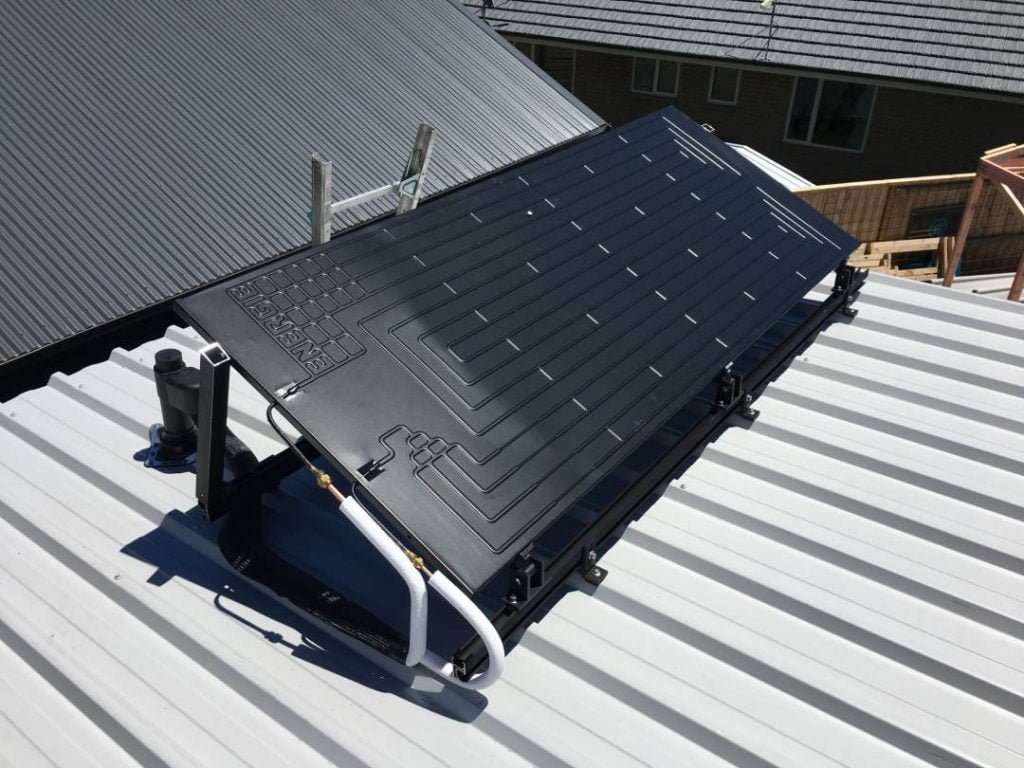
Thermodynamic panels are often introduced as a way to heat domestic hot water in a home. Their potential, however, connects to a much wider set of buildings and operations that need dependable hot water or low-temperature heat. Hotels, gyms, healthcare facilities, schools, farms and some manufacturing sites may all have thermal loads that are worth assessing for heat-pump technology.
It is important to be precise about what “thermodynamic panels” means. In commonly described panel-based systems, an outdoor panel acts as the evaporator—the part of a heat pump that absorbs low-grade heat from its surroundings. A refrigerant circulates through the panel, then a compressor raises its pressure and temperature so the system can transfer useful heat to water. The panel is not a photovoltaic panel and does not generate electricity. Nor is it the same as a conventional solar-thermal collector that heats water directly. The compressor and controls still use electricity.
That distinction matters when considering uses beyond a house. A small thermodynamic-panel water heater should not automatically be assumed to meet a large facility’s demand. Commercial and industrial applications often require larger, engineered heat pumps, different heat sources, storage, or multiple units. The wider heat-pump principle is versatile; the particular equipment must be matched to the job.
How thermodynamic panels work
A heat pump moves heat rather than creating all of it through electrical resistance or fuel combustion. In a panel-based system, refrigerant inside the outdoor panel absorbs heat from ambient air and the panel’s surroundings. The refrigerant evaporates and flows to a compressor. Compression raises its temperature, allowing heat to pass through a heat exchanger into a water cylinder or another heating circuit. The refrigerant then expands and repeats the cycle.
Because this process transfers heat, the useful heat output can exceed the electrical input. The International Energy Agency explains that a typical household heat pump may have a coefficient of performance (COP) of around four, meaning roughly four units of heat output per unit of electricity under the relevant conditions. Actual performance varies with the heat source, outdoor temperature, delivery temperature, equipment, controls and installation. That household example should not be treated as a guaranteed result for every commercial system.
Where the technology may be useful beyond homes
Hotels, hostels and resorts
Hotels need hot water for guest showers, kitchens, housekeeping and sometimes pools or spas. This demand can recur throughout the day, making hot-water production an important load to examine. Heat-pump water heating can be a fit where the facility has space for equipment and storage, suitable electrical capacity, and a demand pattern that the system can serve. A thermodynamic panel setup may be considered for a smaller property or a limited hot-water load, but a large hotel may need a purpose-designed commercial heat-pump plant rather than a residential-scale unit. Commercial heat-pump water heaters are specifically recognized as a way to use ambient heat for water heating in commercial buildings.
Gyms, sports centres and swimming facilities
Fitness centres and sports clubs use hot water in showers and changing rooms. Pools and spas add a separate, often substantial, heating requirement. These loads should be evaluated individually: heating shower water is not the same task as maintaining a large pool at a set temperature. Heat pumps can serve these needs when correctly sized, while panel-based systems may contribute to a smaller hot-water circuit or operate as part of a broader system. Designers should compare heating demand, operating hours, climate, pool-cover practices and available heat sources before selecting equipment.
Healthcare and care facilities
Hospitals, clinics, nursing homes and care centres require reliable hot water for washing, kitchens and laundry. These sites may benefit from heat-pump water heating where the system can supply the required temperature and recover quickly enough for peak use. However, healthcare facilities also have strict requirements around water hygiene, temperature control, redundancy and continuity of service. A panel system is therefore not a plug-in replacement for a boiler: its output, storage, backup and controls need to be designed around the facility’s engineering and public-health standards.
Schools, colleges and offices
Schools and colleges typically have predictable schedules, while offices may have weekday peaks in washrooms and kitchens. Their hot-water demand can be lower than that of a hotel or hospital, but it still may be suitable for an appropriately sized heat-pump water heater. Schools with kitchens, gyms or boarding facilities have more varied loads. In each case, building managers can examine hot-water consumption, operating hours and the existing plant to determine whether heat-pump technology can cover the base load or work alongside existing equipment.
Food service, laundry and light manufacturing
Restaurants, commercial kitchens and laundries use hot water for cleaning and sanitation. Some food and beverage operations also need heat for washing, preheating, drying or other processes. Industrial heat pumps can recover waste heat from one process and upgrade it for another. The IEA Heat Pumping Technologies programme identifies applications such as drying, washing, evaporation and distillation, including in food and beverage, textiles, forest products and chemicals. These examples refer to industrial heat pumps designed for process use—not simply a row of residential thermodynamic panels.
This difference can create opportunities. A facility might use a panel-based heat pump for a modest water-heating circuit, while a separate commercial or industrial heat pump recovers heat from refrigeration, exhaust air, wastewater or process streams. The best heat source depends on the site and the temperatures required.
Agriculture and food production
Farms can have heating, cooling and hot-water needs in greenhouses, livestock buildings, dairies and food-handling areas. Heat pumps may help regulate indoor temperatures, provide water for cleaning, or recover heat from milk cooling for another use. Research on livestock facilities reviews heat pumps for environmental control, including managing temperature and humidity, and notes that economic, technical and infrastructure barriers can affect adoption.
Thermodynamic panels could be explored for selected farm hot-water or low-temperature heating needs where their capacity and operating conditions fit. They should not be presented as a universal solution for agricultural climate control: a greenhouse or barn may need a much larger heating and ventilation system, and a ground, water or waste-heat source could be more suitable than outdoor panels.

Potential benefits for non-residential users
The main attraction is the opportunity to reduce the amount of fuel or direct electric resistance heating used to supply hot water or low-temperature heat. Heat pumps can also make use of heat that would otherwise be rejected, particularly in industrial settings. The International Energy Agency notes that heat pumps can draw on ambient air, ground or water, as well as waste heat from facilities such as factories, data centres and wastewater systems.
A second benefit is flexibility. Heat-pump equipment can be configured for water heating, space heating, or—in suitable designs—both heating and cooling. A hot-water cylinder or thermal store can help match heat production to demand, while a hybrid arrangement can retain a boiler or another heat source for backup or peak loads.
The environmental impact depends on the electricity supply, refrigerant, system efficiency and what equipment is being replaced. A heat pump does not have zero impact simply because it uses ambient heat. Site-specific energy modelling is a better basis for estimating cost and emissions savings than a generic percentage or a claim that a system will eliminate bills.
Key considerations before installation
Before choosing thermodynamic panels for a non-residential site, owners and designers should establish the daily and peak hot-water demand, target water temperature, available installation area, noise and access constraints, climate, electricity capacity and existing backup systems. They should check the panel system’s certified performance data at relevant source and delivery temperatures, not rely only on headline figures.
Scale is especially important. An installation designed for a household cylinder may struggle with the flow rate and recovery time of a busy hotel, hospital or factory. Such sites may need commercial heat-pump water heaters, multiple units, larger thermal storage, waste-heat recovery or a hybrid system. Industrial process heat can also require higher temperatures than domestic hot water, so engineers must verify whether a particular heat pump can meet the process requirements. ACEEE notes that industrial heat pumps can serve processes in sectors including food and beverage, pulp and paper, and chemicals, but these are dedicated industrial systems.
Maintenance and operating strategy also matter. The system requires electrical power and periodic checks of its refrigerant circuit, heat exchangers, filters and controls according to the manufacturer’s instructions. For critical facilities, maintenance planning and backup capacity are part of the design rather than afterthoughts.
A practical way to think about versatility
The versatility of thermodynamic panels beyond residential applications lies less in using identical domestic equipment everywhere and more in applying the heat-pump principle to different thermal needs. A small panel-based system may suit a modest commercial hot-water load. A hotel, school or healthcare building may need a larger commercial heat-pump water heater. A factory or farm may benefit from a purpose-designed system that recovers waste heat or regulates a larger process environment.
The right choice depends on the building, the temperature required, how much heat is needed and when it is needed. With a professional load assessment and correctly sized equipment, heat-pump technology can be considered across many non-residential sectors—while keeping expectations about panel-based products realistic.
FAQs
1. Can thermodynamic panels be used in commercial buildings?
Potentially, yes, particularly for appropriately sized hot-water loads. The building’s demand, required water temperature, electrical capacity, available space and system specification all matter. Larger buildings may need commercial-scale heat-pump equipment rather than a residential thermodynamic-panel unit.
2. Are thermodynamic panels the same as solar panels?
No. Photovoltaic panels generate electricity from sunlight. Solar-thermal collectors capture solar radiation to heat a fluid. Thermodynamic panels in a heat-pump system act as an evaporator and absorb low-grade heat from their surroundings; a compressor uses electricity to upgrade that heat.
3. Can thermodynamic panels heat water at night or in cloudy weather?
A heat pump can continue operating without direct sunshine if the system has a usable heat source and is within its operating range. However, performance depends on ambient conditions and the equipment design. It still consumes electricity, and the panel’s output is not guaranteed to remain constant in every weather condition.
4. Can thermodynamic panels provide industrial process heat?
A panel-based domestic system should not be assumed to supply industrial process heat. Industrial heat pumps can provide heat for selected manufacturing tasks, including washing, drying, evaporation and distillation, but they are engineered for their processes, capacities and temperatures.
5. What should a business check before installing a thermodynamic heat-pump system?
Start with a measured hot-water or heat-demand profile, target temperature, peak flow and operating schedule. Then review equipment capacity, seasonal performance, electrical supply, storage, backup, installation conditions, maintenance and local safety or water-hygiene requirements with a qualified designer or installer.