What does a 1,000-panel solar installation mean?
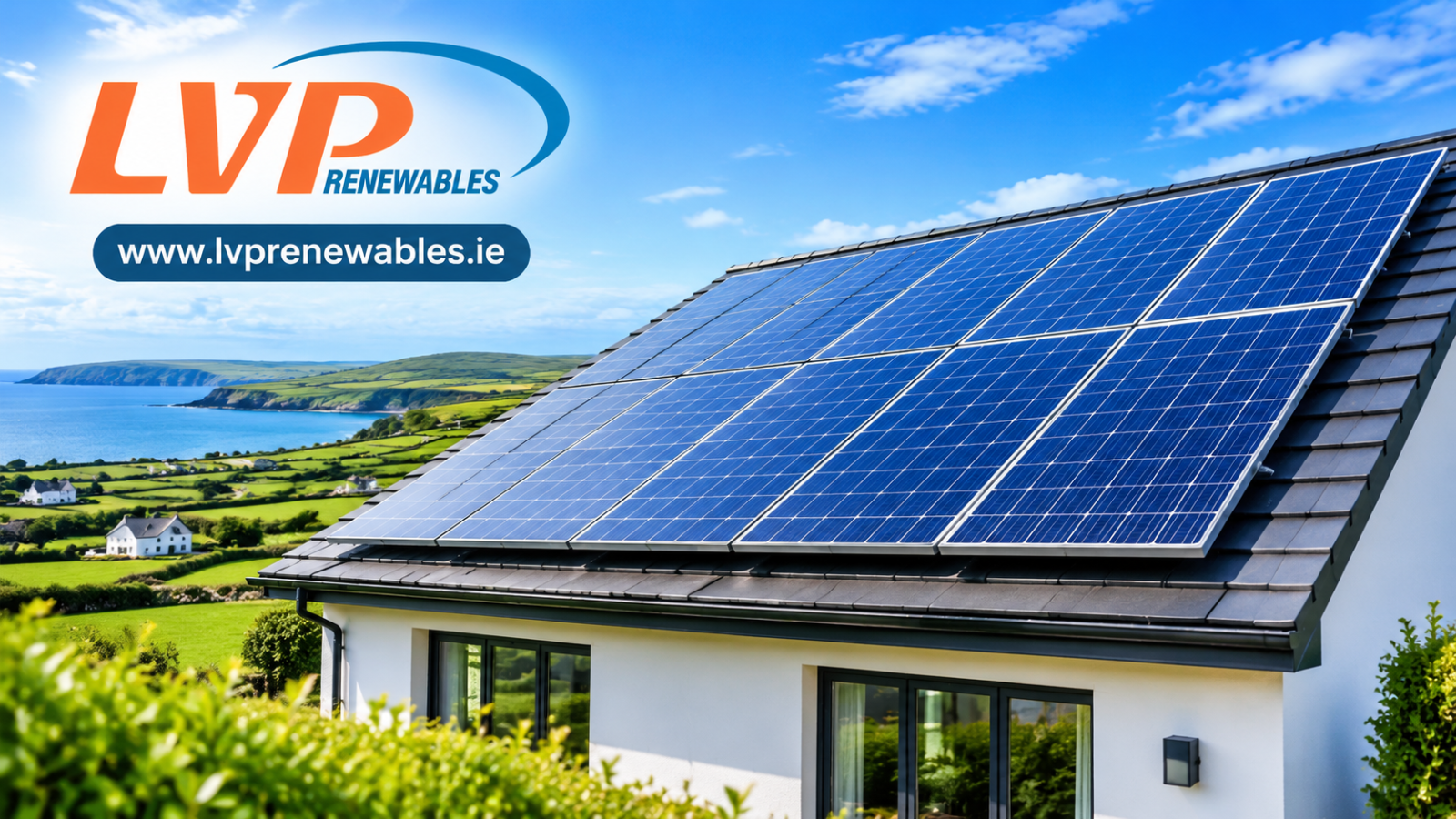
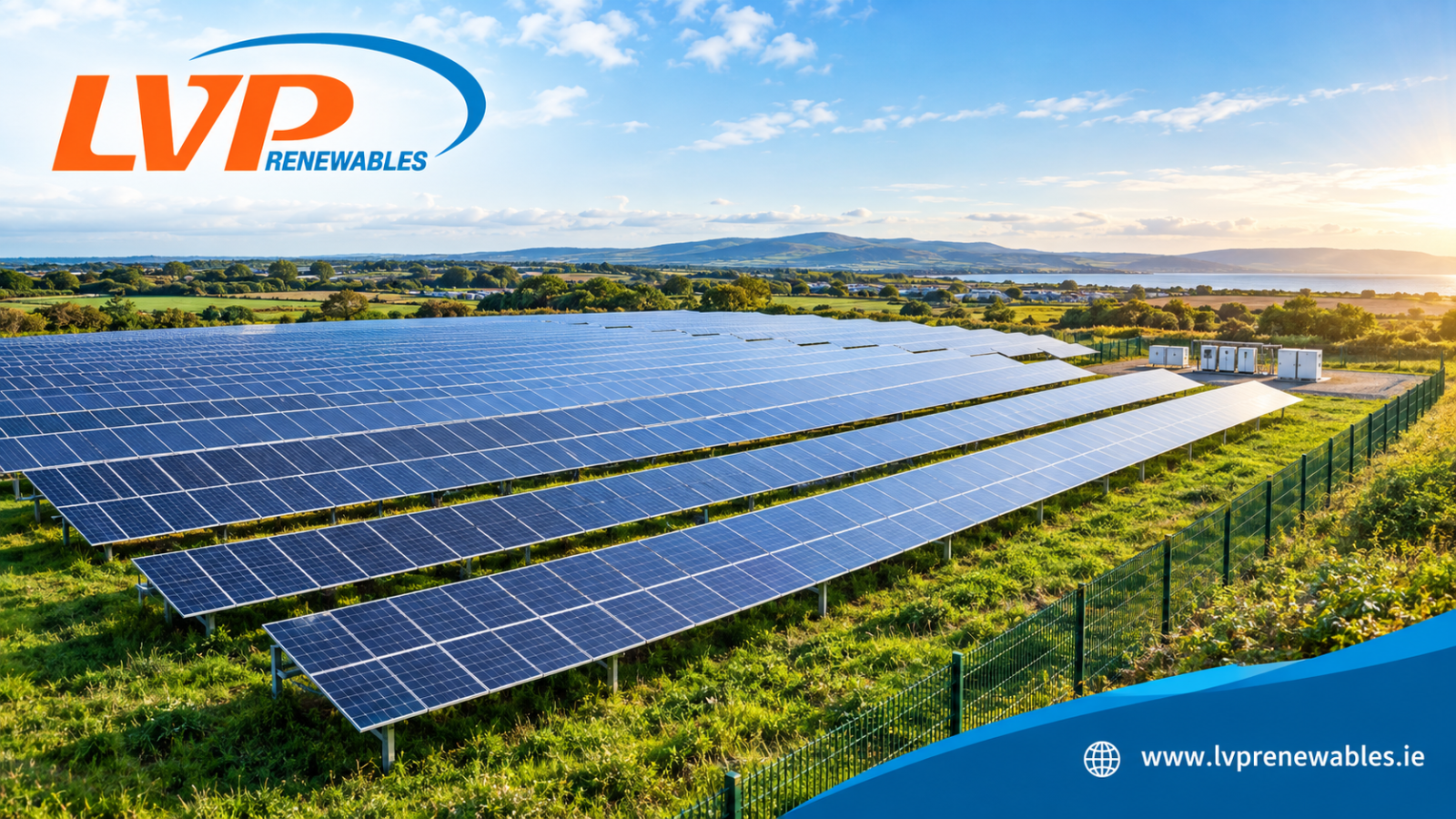
A 1,000-panel solar PV installation is a substantial project for a factory, warehouse, farm, industrial facility, school or other commercial property. It can help reduce the amount of electricity bought from the grid and support an organisation’s energy and sustainability plans. Whether it is the right size depends on more than the number of modules: the site’s electricity demand, roof or land, grid connection and project economics all matter.
The phrase “1,000 solar panels” does not describe one fixed system size. Panel wattage determines the array’s installed capacity, while location and design determine how much electricity it actually produces. A proper feasibility study should also compare generation with the business’s half-hourly electricity use, particularly during daylight hours.
What is the capacity of 1,000 solar panels?
Multiply a panel’s rated wattage by 1,000, then divide by 1,000 to convert watts to kilowatts-peak (kWp). The result is the combined DC nameplate capacity under standard test conditions.
With 400 W panels, the calculation is 1,000 × 400 W, giving an installed capacity of 400 kWp. At the illustrative planning yield below, this system would generate about 360,000 kWh (360 MWh) a year.
With 450 W panels, 1,000 × 450 W gives 450 kWp. Estimated annual generation would be about 405,000 kWh (405 MWh).
With 500 W panels, 1,000 × 500 W gives 500 kWp. Estimated annual generation would be about 450,000 kWh (450 MWh).
These generation estimates use an illustrative planning yield of 900 kWh per kWp per year. They are estimates, not production guarantees.
Panel wattage is the rating of an individual module. Installed capacity is the sum of the panels’ ratings, normally stated in kWp. Actual generation is the electricity produced over time, measured in kilowatt-hours (kWh). A 1,000-panel array is not automatically a 1 MW system: at 450 W per panel, it is 450 kWp. A 1 MWp array would require 1,000 panels rated at 1,000 W each, or a larger number of standard modules.
How much do 1,000 solar panels cost in Ireland?
The 1,000 solar panels cost depends on more than the modules. The final commercial solar installation cost can change with panel and inverter specification, mounting system, roof or ground installation, labour, design and engineering, cabling, switchgear, monitoring, access equipment and the site’s grid connection. Roof repairs or structural strengthening may add significantly to the budget. Battery storage is optional and should be costed separately.
For context, LVP Renewables’ published guide gives an indicative €90,000–€150,000 budget for a 100 kWp commercial system, before VAT and grants. A simple per-kWp extrapolation to a 450 kWp system would be approximately €405,000–€675,000 before VAT and grants. This is only an early screening illustration—not a market-rate claim or quotation for a 1,000-panel installation. The published 100 kWp guide does not establish that all project scopes are included, and large projects can have different unit costs. Battery storage, major grid upgrades, roof works and other additional items should be confirmed separately in a site-specific proposal.
When comparing proposals, check whether each price includes the same scope. Ask for the DC capacity in kWp, inverter AC rating, estimated annual generation, VAT treatment, connection assumptions, exclusions, warranties and any grant assumptions. This is the most useful way to compare the 1,000 solar panels cost across different designs without mistaking a headline price for a complete project budget.
How much roof space or land is required?
The panel faces alone could occupy roughly 1,800–2,500 m², depending on module dimensions. That is not the same as the usable area needed for the complete installation. The layout must account for safe access and maintenance routes, fire and roof-edge clearances, skylights, vents and other plant, shading, roof orientation and the mounting system. A preliminary roof assessment should allow additional working space beyond the modules themselves the final requirement comes from the selected product and engineered layout.
A structural review is important before fixing a large array to a roof. The engineer or installer should consider the roof’s condition, load capacity, wind exposure, mounting method and remaining service life. A ground-mounted array avoids some roof constraints but needs land for row spacing, access, drainage, setbacks and equipment. Its layout and footprint are site-specific, so do not use panel surface area as a proxy for land required.
How much electricity can 1,000 solar panels generate?
For the table above, the illustrative yield is 900 kWh per installed kWp per year: capacity multiplied by 900 gives the estimated annual kWh. This is a transparent planning assumption for Ireland, not a universal yield. Location, orientation, tilt, shading, weather, inverter efficiency, downtime and other system losses affect results. Actual output will also vary from year to year.
The European Commission’s PVGIS tool estimates solar radiation and photovoltaic system performance by location and system configuration. It is useful for an initial site-specific estimate, but the final design should use the actual roof layout, shading and equipment assumptions.
Savings, self-consumption and payback
A business generally gains the most when it uses solar electricity as it is generated. A factory with daytime production, a cold store, or a farm with daytime processing may use a large share directly. If demand is low during sunny hours, more electricity may be exported instead. Export payments depend on the business’s connection, metering and supplier arrangement, so they should not be assumed to match the value of avoided imports.
As an example, take a 450 kWp system producing the estimated 405,000 kWh per year in the table. If the business uses 65% of that electricity on site, it consumes 263,250 kWh of solar power. At an assumed avoidable variable electricity cost of €0.22 per kWh, the illustrative bill reduction is about €57,915 a year, before maintenance and any export income. The assumed tariff is for calculation only, not a statement of current Irish business electricity prices.
Simple payback is the installed project cost, less any confirmed grant, divided by annual net benefits. The result changes with the final installation cost, electricity tariff, operating hours, self-consumption, maintenance, finance and export arrangements. This example is not a payback forecast or promise. Use actual bills and interval data to model the project before making an investment decision.

SEAI commercial solar grants and financial support
The SEAI Non-Domestic Microgeneration Grant (NDMG) may support eligible businesses, agricultural organisations, public bodies, schools, community centres and non-profit societies. SEAI’s scheme page states that systems up to 1,000 kWp can be supported. As of October 2026, new applications made from 6 October 2026 to 6 July 2027 are subject to an enhanced payment rule: the grant paid is the lower of the amount on the application summary or 45% of the invoiced cost. The published tiered grant schedule gives an indicative maximum of €160,200 for 450 kWp before that 45% cap is applied. This is not an entitlement: eligible costs, the application, scheme rules and SEAI approval determine the actual payment.
Applicants should use a registered NDMG solar company and follow SEAI’s application process. Do not start work on the assumption that a grant will be approved or that the maximum amount will apply. Grant support is separate from the project’s full cost, and any other financial or tax support should be checked for eligibility and compatibility.
Planning permission and grid connection in Ireland
Planning requirements depend on the site, installation type and applicable conditions. Irish planning exemptions can cover rooftop solar on many non-domestic buildings, but restrictions remain. For example, designated Solar Safeguarding Zones have a 300 m² rooftop limit for the relevant exemption, and rules also address protected structures and Architectural Conservation Areas. The exemption for non-domestic premises is subject to conditions, including that the installation is primarily for energy use within the building or site. Ground-mounted arrays are treated differently. Seek project-specific planning advice before construction rather than assuming a large installation is automatically exempt.
Grid connection is a separate assessment. ESB Networks classifies renewable connections by installed generation rating, with small-scale generation and large-scale processes above certain thresholds. A 1,000-panel system could have a panel capacity of 400–500 kWp, but its inverter AC rating and export capacity determine the applicable connection route. ESB Networks may need to assess local network capacity and connection requirements. Confirm the route and any export limits early in design.
Is battery storage necessary?
No. A battery is optional and should be assessed against the business’s load profile. It can store some surplus daytime generation for later use, which may help a site with evening or overnight demand. But batteries add capital cost and introduce efficiency losses, equipment compatibility questions and future replacement considerations. Compare a solar-only design with a battery option using actual usage data and export terms.
Why consider large-scale solar for an Irish business?
A well-designed array can reduce grid electricity purchases, improve visibility over some energy costs and help lower operational emissions. The business’s results depend on how much solar electricity it uses, the system’s performance and the value of exported electricity. Solar may also support sustainability targets, but it does not remove the need to consider grid supply, seasonal output or the site’s operational requirements.
LVP Renewables offers commercial solar PV solutions for business premises and can discuss site conditions, electricity demand, roof or land availability and project objectives. A site assessment and tailored quotation are the right next steps for understanding whether a 1,000-panel array suits your facility.
Get a Solar Quote from LVP Renewables: lvprenewables.ie
FAQs
How much do 1,000 solar panels cost in Ireland?
There is no single price. A 450 kWp system’s cost depends on equipment, mounting, electrical works, roof condition and grid requirements. LVP’s published 100 kWp budget, scaled for illustration, suggests roughly €405,000–€675,000 before VAT and grants, but this is not a quote for a 1,000-panel project.
How much electricity can 1,000 solar panels generate annually?
At the illustrative yield of 900 kWh/kWp/year, 400 W, 450 W and 500 W panels would generate approximately 360,000, 405,000 and 450,000 kWh a year respectively. Site-specific PVGIS estimates and an engineering design can refine those figures.
How much roof space is needed for 1,000 solar panels?
The panel faces may total about 1,800–2,500 m², depending on module size. The usable roof area must be larger where access routes, fire clearances, setbacks, skylights, equipment or shading affect the layout.
Are SEAI grants available for a large commercial solar installation?
Eligible organisations may apply through the NDMG, which supports solar PV systems up to 1,000 kWp. Grant rates and conditions are time-sensitive; as of October 2026, new applications in the stated window are subject to the 45% invoiced-cost cap and SEAI approval. Check the live SEAI rules before committing.