Heating a home and supplying hot water can account for a substantial share of household energy use. For homeowners in Ireland, where weather conditions change throughout the year, a renewable heating system needs to be assessed for more than just sunny-day performance. The key questions are how it works in local conditions, how much electricity it uses, and whether its annual running cost is lower than the current heating system.
The article linked from LVP Renewables describes its Solar Block as a thermodynamic system combining outdoor panels with an integrated heat pump. That is different from standard photovoltaic solar panels, which generate electricity, and from conventional solar-thermal collectors, which transfer sunlight’s heat directly to water. In a thermodynamic panel system, the panel is part of a heat pump’s heat-collection circuit.
This distinction matters when comparing costs. Thermodynamic panels do not make heating free: the system uses electricity to run a compressor and controls, and an existing or backup heat source may still contribute. How much money a household saves depends on the home, its existing boiler or heating system, heat demand, electricity tariff, system design and measured seasonal performance.
What are thermodynamic solar panels?
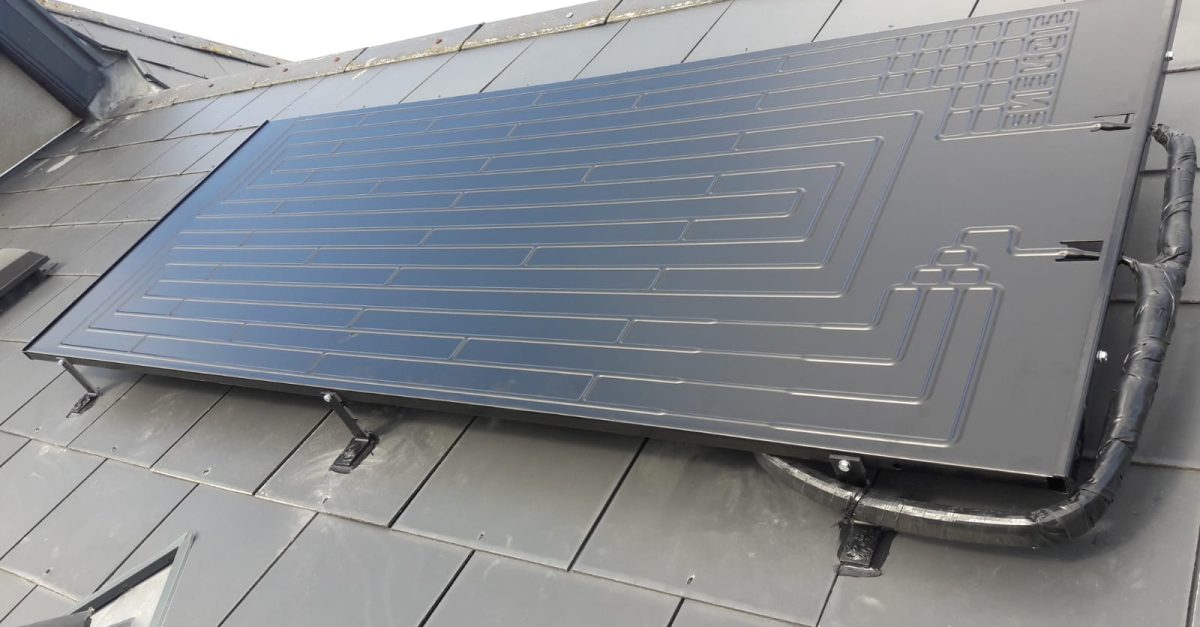
A thermodynamic panel is an outdoor heat exchanger connected to a heat pump. A refrigerant circulates through the panel and absorbs low-grade heat from its surroundings. The refrigerant then passes through a compressor, which raises its pressure and temperature. A heat exchanger transfers that heat to water for domestic hot water or, in a system designed for it, to a home’s heating circuit. The cycle then repeats.
The International Energy Agency explains that heat pumps move heat from a source—such as air, ground or water—rather than producing all of it by burning fuel or using resistance heating. A heat pump needs electricity to operate, but the amount of heat it delivers can be several times the electrical input under suitable conditions. Actual performance changes with source temperature, required water temperature, system design and installation.
LVP Renewables describes its Solar Block as a heat-pump system with thermodynamic panels that can be configured for domestic hot water and central heating. Its product page states that panels may be roof- or wall-mounted and that its heating configuration can work with radiators, underfloor heating and fan-coil systems. These are supplier-specific product descriptions; a site survey and written system design should confirm what is suitable for an individual property.
How can the system help reduce energy costs?
It can replace some heat from a boiler or immersion heater
If the current home heating system relies on oil, gas or direct electric heating, a heat pump may reduce the amount of fuel or electricity needed to provide the same useful heat. The heat pump still consumes electricity. The potential saving comes from transferring environmental heat into the home, rather than generating all the heat directly from the purchased energy source.
For domestic hot water, the system heats a cylinder or other water store so hot water is available when needed. For space heating, a compatible system can circulate warm water through the home’s heat emitters. Whether the savings are significant depends on the current system’s efficiency and the new heat pump’s real-world performance.
It can operate beyond direct sunshine
Traditional solar thermal panels depend mainly on solar radiation to heat a circulating fluid. A thermodynamic panel system works as part of a heat pump, which takes heat from the surrounding environment. This means direct sunshine is not the only factor in operation. However, no system delivers identical output at every time of day or in every weather condition. The compressor consumes electricity, and the overall seasonal result depends on the equipment and operating temperatures.
The LVP article emphasizes use in Ireland’s changeable weather and says the system is intended to provide hot water throughout the year. Homeowners should ask for product-specific performance data and expected electricity consumption for their own household rather than assume that every property will achieve complete hot-water coverage.
It can work well with low-temperature heating
Heat pumps generally perform better when they can provide the home’s required warmth at lower water temperatures. Underfloor heating is often well suited because it spreads heat over a large area. Larger or specially designed radiators can also help a home meet its heat demand with lower flow temperatures. The Sustainable Energy Authority of Ireland (SEAI) notes that lower heat-distribution temperatures improve heat-pump performance and that building insulation and heating-system design are important parts of an efficient installation.
This is why a heat pump should not be compared only by its brochure efficiency. If the property loses heat quickly or the radiators require high temperatures, the system may need more electricity to maintain comfort. Improving insulation, sealing draughts and sizing the emitters correctly can support better performance, subject to a professional assessment.
What determines how much you can save?
Your current heating fuel and annual use
A home switching from an older, inefficient heating system may have a different savings opportunity from a home that already uses an efficient boiler or heat pump. Before requesting a quote, gather recent fuel and electricity bills and identify how much energy goes to space heating and hot water. A comparison should use annual consumption, not just a single month, because heating demand changes with the seasons.
The system’s seasonal performance
A coefficient of performance (COP) describes heat output compared with electricity input at particular operating conditions. It is useful for understanding a heat pump at a specified test point, but it does not on its own show a year of household performance. SEAI describes the seasonal performance factor (SPF) as a measure of heat delivered over a full year relative to electricity used during that period. For a real cost comparison, ask whether a quotation gives an estimated seasonal figure and what equipment and auxiliary energy are included.
The home’s insulation and heating emitters
A well-insulated home can require less heat to stay comfortable. The design of the distribution system also matters: underfloor heating or appropriately sized radiators may allow lower water temperatures than undersized radiators in a poorly insulated property. SEAI stresses that a heat pump is sensitive to system temperatures and design choices, so the heating circuit must be checked as part of the installation plan.
Electricity and fuel prices
A system may lower energy use but still produce different financial results as tariffs change. The cost comparison should include the electricity consumed by the compressor, pumps and controls, any remaining use of a boiler or immersion heater, standing charges where relevant, and maintenance costs. If the system uses a time-of-use tariff, ask how its controls and hot-water storage will make use of the cheaper periods.
Installation quality and ongoing operation
Sizing, placement, controls, commissioning and user settings all affect how a heat pump performs. The installer should explain how to schedule heating and hot water, how to use any backup heater, what maintenance is required and how performance can be monitored. A system that is oversized or incorrectly configured may cost more than expected to run.
Why underfloor heating may complement a heat pump
Underfloor heating distributes warmth across a large floor area, which can help provide comfortable room temperatures with relatively low water temperatures. This operating pattern can be a good match for a heat pump designed for low-temperature heating. The LVP Renewables article specifically highlights compatibility between its thermodynamic system and underfloor heating.
Compatibility alone does not prove that a particular installation will save money. The floor construction, insulation below the heating loops, controls, room-by-room heat loss and the system’s flow temperature all matter. Existing homes with radiators can also be considered, but an installer may need to assess whether the radiators are large enough or if upgrades are required.
How to compare a quote and calculate likely savings
Request a design based on your home’s actual heat loss and hot-water use. Ask the installer to state the estimated annual heat demand, projected electricity use, expected seasonal performance, backup contribution and assumptions about weather and occupancy. If the quotation claims a specific bill saving, ask for the underlying fuel prices and baseline system efficiency so you can check the calculation.
Compare total ownership costs as well as energy use. Include the installed price, any required cylinder or radiator changes, electrical upgrades, servicing, warranty terms and expected replacement of components. Check whether current grants or other supports apply, and confirm eligibility directly with the relevant Irish scheme before including grant money in a payback estimate. Grant rules can change.
A useful way to think about payback is to compare the additional upfront cost with the realistic annual reduction in energy spending. Divide the net investment by the estimated annual saving to get a simple payback estimate, then remember that future energy prices, maintenance and actual system performance may change the outcome. This estimate is a planning tool, not a guarantee.
Is a thermodynamic Solar Block right for every home?
No single heating system suits every property. A suitable home needs a heat pump sized for its heat demand, compatible heat emitters, adequate space for the indoor unit and hot-water cylinder, and an appropriate location for the outdoor panel. Roof or wall condition, shading, pipe routes, noise, access and local planning requirements may also need review.
Homes with poor insulation or high-temperature heating circuits may need additional improvements before a heat pump can operate efficiently. Some properties may benefit from a hybrid design or from another type of heat pump. A qualified installer should compare the proposed system with the home’s existing heating options rather than make a savings claim from panel count alone.
The bottom line
can help reduce household energy costs when they are part of a properly designed heat-pump system that delivers heat efficiently and replaces a more expensive or less efficient source. Their ability to collect heat from the environment makes them different from PV panels and conventional solar-thermal collectors, but electricity consumption remains part of the running cost.
For homeowners in Ireland, the best route to an informed decision is a property-specific assessment. Compare annual heat demand, electricity use, seasonal performance, installation cost and backup requirements. When the system is well matched to the home—especially where low-temperature heating can be used—it may offer a more efficient route to hot water and indoor comfort. The actual financial benefit should be demonstrated in a transparent, itemised estimate rather than assumed.
Frequently Asked Questions
1. How do thermodynamic solar panels save money?
They work as the heat-collection part of a heat pump. The pump uses electricity to transfer environmental heat into a home’s hot-water or heating circuit. Savings may result when this system uses less purchased energy than the heating system it replaces, but the result depends on annual performance and local energy prices.
2. Are thermodynamic panels the same as PV solar panels?
No. PV panels generate electricity. Thermodynamic panels are connected to a heat pump and absorb low-grade heat from their surroundings so it can be upgraded and transferred to water or a heating circuit. They should also not be confused with conventional solar-thermal collectors that heat a fluid directly using solar radiation.
3. Will a thermodynamic system work when it is cloudy or dark?
A heat-pump system can draw on heat from its surroundings and does not rely solely on direct sunshine. Its output and efficiency still vary with source and operating conditions, and the compressor uses electricity. Ask for performance information for the specific model and climate rather than assuming constant output.
4. Can a thermodynamic Solar Block heat a home as well as provide hot water?
LVP Renewables describes its Solar Block as configurable for central heating and hot water, including use with underfloor heating, radiators and fan coils. Suitability depends on the home’s heat demand, system design and emitters, so confirm the configuration in a written site-specific proposal.
5. Is underfloor heating necessary for a heat pump to save money?
No. Underfloor heating can be a good match because it can deliver comfort at lower water temperatures, but correctly sized radiators may also work. SEAI emphasizes low distribution temperatures and appropriate system design as important factors in heat-pump performance.