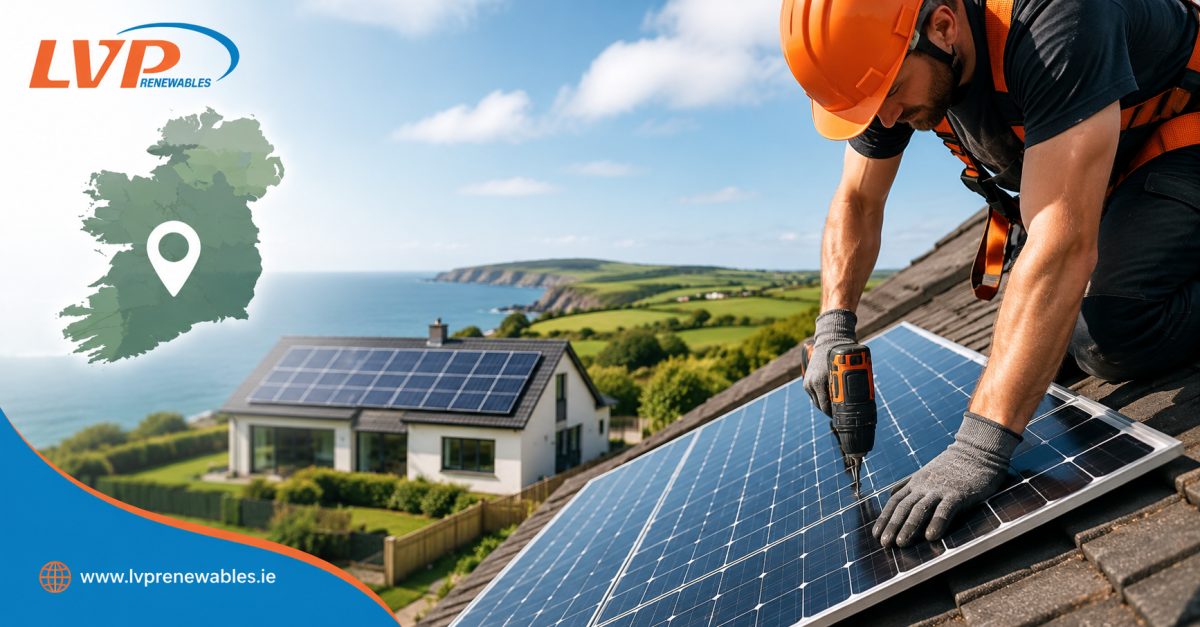
One of the biggest questions Irish homeowners ask before going solar is whether they need planning permission. It is an understandable concern. Nobody wants to invest in a new system and then discover a planning problem, especially when the roof, property location or visual impact is unusual.
The reassuring answer is that, for most standard houses, solar panels in Ireland no longer require a planning application. The major changes introduced in October 2022 removed the former nationwide limits on the area of rooftop solar that could be installed on a house. However, the exemption is subject to conditions and does not override the special rules that can apply to protected structures, Architectural Conservation Areas or unusual ground-mounted installations.
Planning permission and SEAI grant approval are also separate matters. A home may be exempt from planning permission but still need to meet the SEAI grant conditions. Similarly, a project that needs planning permission may still be eligible for grant support once all approvals and scheme requirements have been satisfied.
The 2022 Rule Change That Made Solar Easier for Irish Homeowners
Before October 2022, Irish homeowners faced strict limits when installing rooftop solar panels. The former exemption generally limited panels to 12 square metres or 50% of the roof area, whichever was smaller. For many families, those limits made it difficult to install enough panels to make a meaningful difference to electricity bills.
In October 2022, the Government changed the Planning and Development Regulations through the solar planning exemption regulations. For houses, the former 12 square metre and 50% roof-area limits were removed nationwide. This means a house can generally have solar panels covering the full roof without submitting a standard planning application, provided the installation meets the relevant exemption conditions.
The reform was designed to reduce unnecessary administration and support Ireland’s transition to renewable electricity. It also made it easier for households to choose a system size based on electricity consumption, available roof area and budget rather than an old planning-area limit.
For a typical rooftop installation on a house, the key conditions include the following:
•The panels must not project more than 15cm above the roof surface where that condition applies.
•The panels must not extend above the roof ridge line.
•The installation must comply with the applicable setback and roof-edge conditions.
•General planning restrictions still apply to protected structures and areas of architectural significance.
•The house must not be affected by a condition that removes the exemption.
The exact application of an exemption can depend on the building, roof type and location. A competent installer should check the design rather than simply assume that every property qualifies in exactly the same way.
No permission normally needed
For most ordinary houses, the following projects are generally covered by the rooftop or small domestic solar exemptions, subject to the applicable conditions:
•Standard rooftop solar PV on a house.
•Pitched-roof installations facing different directions.
•Rooftop systems covering the available roof area within the exemption conditions.
•Semi-detached and detached houses throughout Ireland.
•Small domestic ground-mounted systems that remain within the relevant size, height and open-space conditions.
Permission or further checking may be required
The following situations deserve extra care before work begins:
•A protected structure or a proposed protected structure.
•A property in an Architectural Conservation Area where the panels could materially affect the character of the area.
•A large ground-mounted installation above the domestic exemption limits.
•A system affected by glare or safeguarding requirements near an airport, aerodrome or helipad.
•A large commercial, agricultural or community installation subject to non-domestic rules.
•An unusual roof, boundary or building arrangement where the exemption conditions are unclear.
Apartment owners should also check the management company’s rules, lease terms and ownership of the roof. A rooftop installation may be exempt from a planning application but still require internal consent, a management-company decision or agreement about shared building infrastructure.

When Planning Permission Is Still Required in Ireland
The 2022 changes cover a large proportion of residential solar installations, but they do not remove every planning restriction. There are several circumstances where a homeowner should contact the local authority, planning office or a suitably experienced professional before ordering equipment.
Protected structures
If the property is listed on the local authority’s Record of Protected Structures, works that materially affect its character may require formal consent. Solar panels, fixings, cable routes and associated equipment can change the appearance or fabric of a protected building, so the normal house exemption should not be assumed.
You can check the relevant local authority’s planning information or contact its heritage or conservation officer. In some cases, a Section 5 declaration can help confirm whether a proposed development is exempted development or requires planning permission. For protected structures, other statutory routes may also be relevant.
Architectural Conservation Areas
Additional restrictions may apply in an Architectural Conservation Area, especially where panels are visible from a public road or affect the character of the streetscape. A rear or side installation may be acceptable in some circumstances, but the result depends on the particular conservation area and the effect of the work.
The presence of an Architectural Conservation Area does not automatically mean that solar panels are impossible. It does mean that the homeowner should obtain location-specific advice before installation. The local development plan and conservation guidance may provide further information.
Solar Safeguarding Zones
Ireland has designated Solar Safeguarding Zones around certain airports, aerodromes and sites with helipads. These zones exist because large solar installations can create glint and glare concerns that may affect aviation safety.
The rules differ between houses and other classes of development. Standard residential rooftop installations are generally treated more favourably than large commercial or agricultural systems, but a property near an airport or helipad should still be checked. Larger installations in a safeguarding zone may need planning permission or additional review.
Large or ground-mounted systems
Domestic free-standing solar panels can be exempt from planning permission when they meet the applicable conditions. Current guidance for a house includes limits such as a maximum 25 square metre panel area, a maximum height condition, placement away from the front wall and the retention of the required private open space to the rear or side.
A ground-mounted array above the size or height limit will generally need a planning application before work begins. The same applies to many larger commercial, agricultural and community systems, which are assessed under their own exemptions and planning rules.
If there is genuine uncertainty, a homeowner can ask the local authority for a Section 5 declaration. This is a formal written opinion on whether a proposal is exempted development or requires planning permission. The fee and response period are set under the relevant local authority process, so confirm the current amount and expected time directly with the council rather than relying on an old online figure.
Planning Permission, the SEAI Grant and What Comes Next
A common concern is whether planning permission affects eligibility for the SEAI Solar PV Grant. Planning compliance and SEAI grant approval are separate processes. SEAI grant approval does not replace planning permission, and receiving a grant offer does not automatically confirm that a planning exemption applies.
The current standard domestic Solar PV grant can provide up to €1,800, calculated at €700 per kWp for the first 2kWp and €200 for each additional kWp up to 4kWp. A system larger than 4kWp does not receive an unlimited grant for every extra panel because the standard grant calculation is capped.
The 2026 rules also include a separate €600 battery grant for an eligible home battery rated at 5kWh or larger. Batteries below 5kWh do not qualify for that battery grant. Therefore, the potential standard support for eligible solar PV and battery installation can be up to €2,400 in total.
Some qualifying households may be eligible for enhanced support of up to €9,000 for solar PV up to 4kWp and a 5kWh or larger battery. This higher support is subject to specific Department of Social Protection payment and property conditions.
The SEAI process normally requires the following steps:
•Choose an SEAI-registered solar PV company and obtain a written quotation.
•Apply for the grant before any installation work begins.
•Wait for the Letter of Offer and check the named contractor, system details and grant amount.
•Arrange the required ESB Networks connection documentation, including the NC6 process where applicable.
•Complete the installation using the approved contractor and equipment.
•Arrange a post-works BER assessment where required for grant drawdown.
•Submit the Declaration of Works, electrical certificates, invoice, photographs and other completion documents.
•Receive payment after SEAI has accepted the required evidence.
The BER certificate issued after 24 May 2026 will use the simplified A0-to-G scale. This change does not itself remove the Solar PV grant. Existing BER certificates remain valid for 10 years from their issue date, and the new certificate format should not be confused with planning approval.
The domestic SEAI grant eligibility rules also require the property to have an MPRN and, under the updated 2026 scheme information, to have been built and occupied before 2025. Previous grant funding at the same MPRN can affect eligibility. Always check the current Letter of Offer and official SEAI guidance before committing to work.
FAQs
Do I need planning permission for solar panels in Ireland in 2026?
In most cases, no. Rooftop solar panels on an ordinary house are generally exempt from planning permission under the 2022 regulations, provided the installation meets the relevant conditions. The full roof-area limit that previously applied to houses was removed. Restrictions can still apply to protected structures, Architectural Conservation Areas, unusual properties, large ground-mounted systems and certain safeguarding situations.
Can I get the SEAI solar grant without planning permission?
Yes, if the installation is exempted development and meets the SEAI grant conditions. Planning compliance is separate from the grant process. The standard domestic Solar PV grant is up to €1,800, and an eligible 5kWh or larger battery may qualify for an additional €600. Apply for the grant and receive the Letter of Offer before installation begins.
What is a Section 5 declaration and do I need one?
A Section 5 declaration is a written decision from the local planning authority on whether a proposed development is exempted development or requires planning permission. It can be useful where a property is protected, located in an Architectural Conservation Area or has an unusual roof or ground-mounted arrangement. The current fee and response period should be confirmed with the relevant council.
Can I install solar panels across my entire roof?
For an ordinary house, the 2022 change removed the former 12 square metre and 50% roof-area limits. A full-roof installation can generally be exempt from planning permission if it meets the applicable projection, ridge, setback and general planning conditions.
Do ground-mounted solar panels need planning permission?
Small domestic ground-mounted systems may be exempt if they stay within the relevant area, height, location and private open-space limits. Larger arrays or installations that do not meet those conditions may require planning permission before work begins.
Do solar safeguarding zones affect every home?
No. Solar Safeguarding Zones are mainly intended to manage glint and glare risks near airports, aerodromes and helipads. The detailed effect depends on the property and type of installation. Standard residential rooftop systems are generally treated differently from large commercial or agricultural installations, but checking the property location is sensible if it is near an aviation facility.
Does an apartment need planning permission for rooftop solar?
The planning exemption and the building’s management rules are separate. Even when a rooftop solar installation is exempt from a planning application, an apartment owner may need consent from the management company, landlord or owners’ management company. Check ownership, access, roof rights and insurance requirements before proceeding.
Go Solar With Confidence — LVP Renewables Handles Everything
LVP Renewables states that it is an SEAI-registered solar installer with more than 40 years of renewable energy experience and over 5,000 completed installations. The company can assess the roof, discuss whether a planning check is needed, coordinate the SEAI grant application and support the ESB Networks and BER documentation process.
Its services include domestic Solar PV installation, battery storage, thermodynamic hot-water systems, Zappi EV chargers, commercial Solar PV and support with relevant residential, agricultural and non-domestic grant schemes. The company also states that it installs premium Jinko Solar panels with Solis inverters and manufacturer warranties.
Homeowners should still ask for an itemised written quotation identifying the panel model, inverter, battery, warranties, scaffolding, grid paperwork, BER arrangements, planning responsibility and total price. A reputable installer should explain what is included and should not promise that every property is automatically exempt.
For more information, contact LVP Renewables on (01) 864 3838 or visit lvprenewables.ie to request a free, no-obligation survey. The final decision about planning permission remains subject to the property, the regulations and, where needed, the local planning authority.