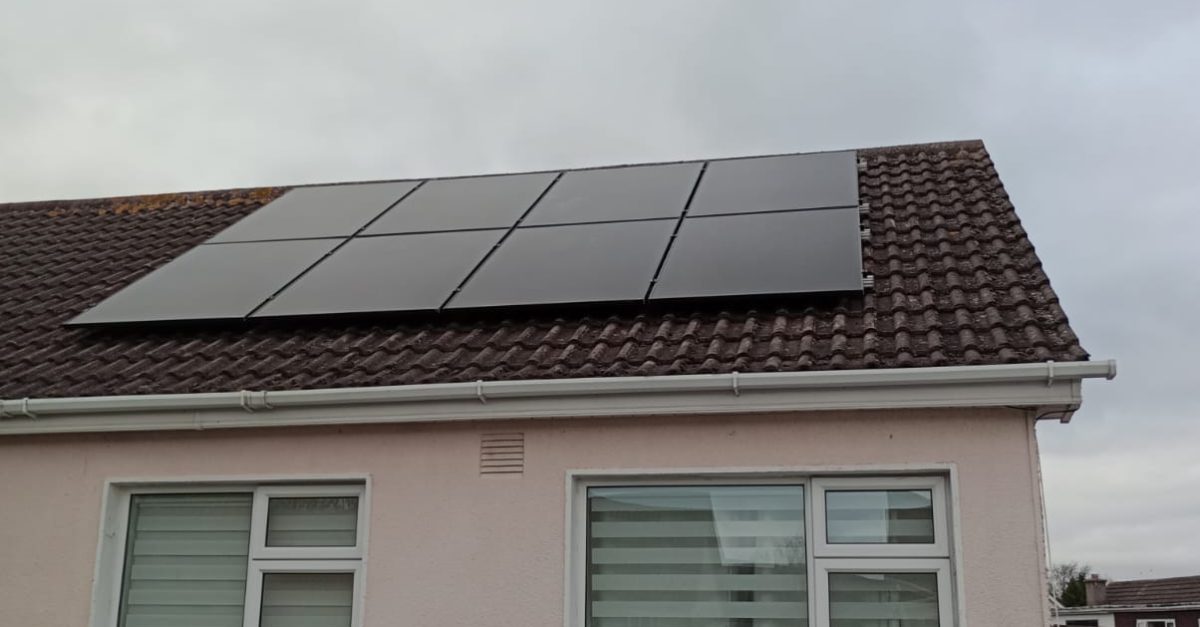
With electricity costs prompting more households to consider renewable power, solar panels remain an option for homeowners across Ireland. The Sustainable Energy Authority of Ireland (SEAI) offers grant support for eligible residential solar PV installations, helping to reduce the upfront cost. The standard grant is based on system size, and the application must be approved before installation work begins.
This guide covers the current standard grant amounts, eligibility criteria and application steps, along with other supports that may be relevant in 2026.
Solar grants can help to:
•Reduce the upfront cost of an eligible solar PV system.
•Improve the potential value of generating and using renewable electricity at home.
•Make solar energy more accessible to qualifying households.
What Is the SEAI Solar Panel Grant?
The SEAI Solar PV Electricity Grant provides financial support towards the cost of buying and installing solar photovoltaic panels at an eligible home. The grant is paid after the work is completed and the required documents have been submitted. A grant offer must be in place before installation starts.
Key Benefits
•Grant payment: The standard grant is paid after approved installation work and documentation are complete.
•Renewable electricity: Solar PV lets a home generate electricity from sunlight.
•Battery support: A separate €600 grant is now available for eligible home battery systems of 5 kWh or larger. Check the current scheme terms before applying.
SEAI Solar Grant Amounts in 2026
For the standard residential Solar PV grant, the maximum is €1,800 for a system of up to 4 kWp. The grant is calculated by system size: €700 per kWp for the first 2 kWp, then €200 for each additional kWp up to 4 kWp.
Typical Grant Breakdown
•1 kWp system: €700.
•2 kWp system: €1,400.
•3 kWp system: €1,600.
•4 kWp system: €1,800 maximum.
The standard solar PV grant is capped at €1,800. Eligible applicants may also be able to apply for a separate €600 battery grant for a home battery system of 5 kWh or larger. This can bring the combined standard support to as much as €2,400 when both measures meet the scheme requirements.
Example
A 2 kWp system receives €1,400 under the standard rate, while a 4 kWp system reaches the €1,800 maximum. The grant is calculated on a pro-rata basis for system sizes between those examples. A larger system does not receive more than the standard grant cap.
Eligibility Criteria for Solar Grants
The standard SEAI Solar PV grant is available to qualifying property owners, including homeowners and private landlords. As of 6 October 2026, the home must have been built and occupied before 2025, have an MPRN, and not have received previous SEAI solar PV funding at that MPRN.
You Must:
•Own an eligible property and provide its MPRN.
•Use an SEAI-registered solar PV company and installer.
•Install new materials that have not already received another grant.
•Meet the SEAI scheme requirements and applicable technical standards.
•Apply and receive grant approval before installation begins.
•Complete the work and submit the required documents within the grant offer period, currently eight months.
Not Eligible If:
•The home falls outside the current age-and-occupancy requirement. Under the updated rules from 6 October 2026, a home must have been built and occupied before 2025 to qualify for the standard scheme.
•The same MPRN has already received SEAI solar PV funding.
•The work is started before grant approval, or the installation does not meet the scheme requirements.
•The installation uses an unregistered company or does not provide the required completion documents.
How to Apply for Solar Panel Grants in Ireland
The application process is straightforward, but the order matters. SEAI approval must be received before the installation work starts.
Step-by-Step Process
1.Choose an SEAI-registered installer. Get and compare written quotes and confirm that the installer is listed with SEAI.
2.Apply through the SEAI portal. Provide your property address, MPRN, house build year, installer details and proposed system information.
3.Wait for the grant offer. Do not begin work until the application is approved.
4.Install the solar panels. Have the registered company complete the work in line with scheme requirements.
5.Submit the completion documents. Your installer will provide and upload the required documents, including the declaration of works. Complete the post-work BER assessment where required.
6.Receive payment. SEAI pays the grant after the work and documentation have been reviewed. The current grant offer gives eight months to complete the work and submit documents.
Important:
Do not start installation before receiving grant approval. Starting work early can make the installation ineligible for grant support.
How Much Can You Save with the Grant?
The supplied estimate gives a pre-grant system cost range of €6,000–€10,000. Treat this as a broad guide only: actual quotes vary with system size, equipment, roof conditions and other project details. Request current quotes before estimating your net cost.
For an eligible 4 kWp standard installation, the SEAI PV grant can reduce the upfront cost by up to €1,800. If you also qualify for the separate €600 battery grant for a system of at least 5 kWh, the combined standard grant support may reach €2,400. The battery grant has its own application requirements.
Additional Savings
A solar PV system may also help a household:
•Reduce electricity bought from the grid by using some of its own generation.
•Receive export payments for metered surplus electricity sent to the grid, with the rate set by the electricity supplier.
•Benefit from the 0% VAT rate on the supply and installation of solar panels on private residences and schools.
•Add value or appeal to a property, although any impact depends on the home and local market.
Savings vary by household, system design, electricity use, export rate and installation cost. Use SEAI's solar electricity calculator and current installer quotes to estimate payback rather than relying on a fixed figure.
Are There Additional Supports in 2026?
Yes. In addition to the standard residential grant, there are export-payment arrangements and a 0% VAT rate. New enhanced supports announced for 2026 also apply to specific groups and should not be confused with the standard grant.
1. Microgeneration Scheme
Under Ireland's microgeneration arrangements, electricity suppliers pay customers for metered electricity exported to the grid. The applicable rate is supplier-specific, so check your current tariff and bill for the rate you receive.
2. VAT Reduction
A 0% VAT rate applies to the supply and installation of solar panels on private residences and schools.
SEAI also lists enhanced solar PV and battery support for some homeowners receiving qualifying Department of Social Protection payments and for certain Dublin Rental Accommodation Scheme tenancies. These enhanced supports can reach up to €9,000 for eligible solar PV and battery systems, subject to the programme's rules. Eligibility and application routes differ from the standard grant, so check SEAI's latest guidance.
Is It Worth Getting Solar Panels in 2026?
Solar panels may be worthwhile for many homes, but the result depends on the property's suitability, the system price, household electricity use, grant eligibility and export arrangements. Compare the expected savings with the upfront cost and use SEAI's calculator or an installer assessment before making a decision.
Benefits
•Potentially lower electricity bills through self-consumption.
•Possible export payments for surplus electricity.
•Renewable electricity generation at home.
•Grant support for eligible solar PV and, separately, eligible home battery systems.
Payback estimates such as the 5–7 years cited in the supplied draft are not guaranteed. The actual payback period can differ significantly between households.
Common Mistakes to Avoid
Avoid these common application errors:
•Starting installation before grant approval.
•Choosing a company that is not SEAI-registered.
•Selecting a system without checking the home's usage and grant limits.
•Forgetting the completion documents or missing the grant offer deadline.
Tips to Maximise Your Grant
•Choose a system size that suits your electricity use and roof. A 4 kWp system reaches the standard solar PV grant maximum, but a larger system does not increase that grant.
•Work with an experienced SEAI-registered installer and compare quotes.
•Consider battery storage if it suits your usage pattern. A separate €600 SEAI grant is listed for eligible home battery systems of 5 kWh or larger.
•Apply before work starts and keep track of your grant offer's completion deadline.
Final Thoughts
The SEAI solar PV grant can help reduce the cost of installing solar panels in Ireland. Under the standard 2026 scheme, the grant reaches up to €1,800 for a 4 kWp system, with a separate €600 battery grant potentially available for eligible systems. Updated eligibility from 6 October 2026 includes homes built and occupied before 2025.
The key is to check the latest scheme rules, choose a registered installer and receive approval before installation begins. For the current eligibility criteria and grant values, consult SEAI before committing to work.
FAQs
1. How much is the SEAI solar panel grant in 2026?
The standard residential grant is up to €1,800 for a solar PV system of up to 4 kWp. It pays €700 per kWp for the first 2 kWp, then €200 for each additional kWp up to 4 kWp.
2. Which homes are eligible for the solar grant in 2026?
From 6 October 2026, the home must have been built and occupied before 2025. It also needs an MPRN and must not have received previous SEAI solar PV funding at that MPRN. Other scheme requirements apply.
3. Can I apply for the grant after the solar panels are installed?
No. You must receive grant approval before installation work starts. After approval, you currently have eight months to complete the work and submit the required documents.
4. Is there a separate SEAI grant for a home battery?
Yes. SEAI lists a separate €600 grant for eligible home battery systems of 5 kWh or larger. Check the latest scheme conditions before applying.