Introduction
If you've heard about the Electric Ireland solar panel tariff cut and are wondering whether solar is still worth it, you're not alone. Electric Ireland reduced its microgeneration export rate from 21 cent per kWh to 19.5 cent per kWh, and headlines framing this as bad news for solar owners have understandably left some homeowners second-guessing the investment.
The good news is that export income was always just one part of the financial picture for Solar Panels Ireland wide, and even after the cut, solar remains a genuinely worthwhile investment. Here's what the numbers actually look like now.
What Changed With the Electric Ireland Tariff Cut
Electric Ireland's Clean Export Guarantee (CEG) rate, the payment you receive for surplus electricity your panels send back to the grid, dropped from 21c/kWh to 19.5c/kWh. This rate sits in the mid-range compared to other Irish suppliers, some of which pay less, and a couple of which pay more.
It's worth remembering that export tariffs across every supplier move up and down over time, responding to wholesale energy prices and market conditions. A cut from one supplier doesn't mean solar has stopped paying off, it just means the export side of your return has shifted slightly.
How Solar Panels Actually Earn You Money
Export payments are only one of several ways Solar Panels save and earn you money. It helps to break the full picture down:
- Bill savings from self-consumption. Electricity you generate and use yourself is worth far more than exported electricity, since it offsets what you'd otherwise pay your supplier per unit.
- Export income (CEG). Surplus electricity your home doesn't use gets sent to the grid and credited to your bill at your supplier's export rate.
- The SEAI grant. Up to €1,800 off the upfront cost of a typical 4kWp residential system, reducing what you need to earn back in the first place.
- 0% VAT. Solar panel supply and installation on private homes is currently VAT-free, further lowering the total cost.
What You Can Still Earn After the Cut
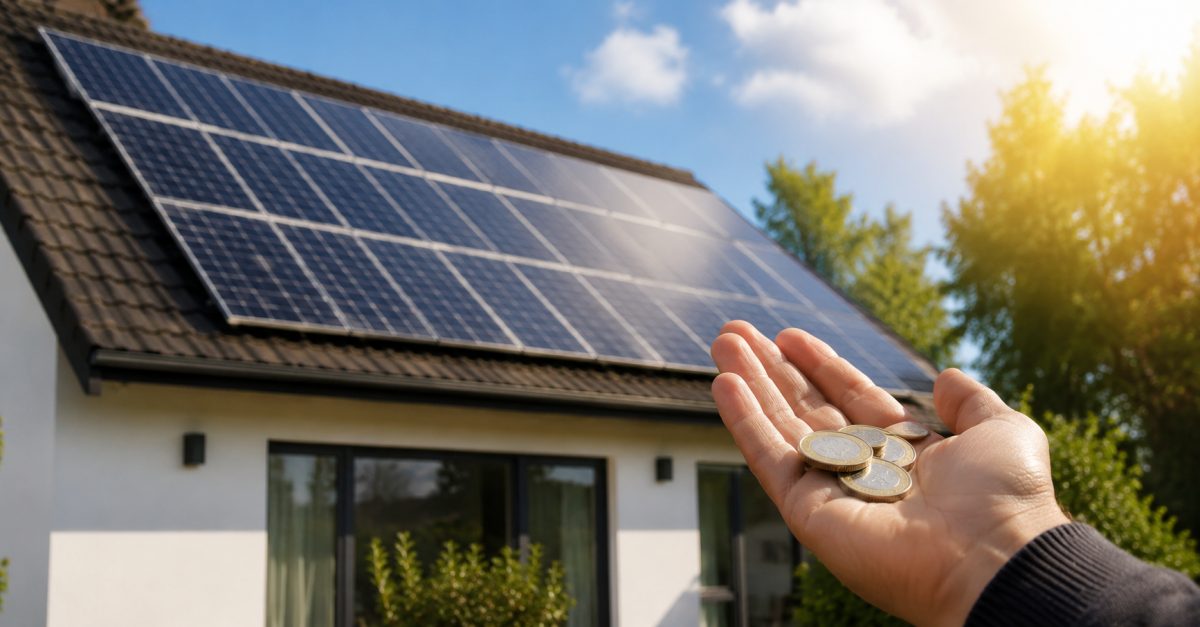
For a typical residential solar PV system, export income alone commonly falls somewhere in the range of a few hundred euro per year, depending on system size, how much electricity your household uses during the day, and whether you have battery storage.
- A smaller system exporting modest surplus can still earn a meaningful annual credit at 19.5c/kWh
- Larger systems, or homes with fewer daytime occupants using less of their own generation, tend to export more and earn proportionally more
- The first €400 of export income per year is currently tax-free, a relief that has been extended out to the end of 2028
Even with the reduced rate, 19.5c/kWh remains a solid, mid-market payment, and it's far from the lowest available in the Irish market.
Self-Consumption Matters More Than the Export Rate
Here's the detail that often gets lost in headlines about tariff cuts: using your own solar electricity is worth considerably more than exporting it, because you avoid paying your full import rate rather than earning a lower export rate.
Simple habits can shift more of your generation into self-consumption:
- Running washing machines, dishwashers, and tumble dryers during daylight hours
- Timing immersion heating to coincide with peak generation
- Charging an EV during the day where possible
- Adding battery storage to shift daytime surplus into evening use
Households that increase self-consumption, rather than relying purely on export income, tend to see a stronger overall return regardless of which supplier's export rate is highest this year.
Should Dublin Homeowners Still Consider Solar?
For Solar Panels Dublin households weighing up whether it's still worth installing, the answer hasn't fundamentally changed. Export tariffs will keep shifting between suppliers over the lifetime of a solar system, but the core savings, on your own electricity use, the SEAI grant, and 0% VAT, remain firmly in place. A well-sized system, matched to your household's actual usage patterns, continues to deliver strong long-term value even with a slightly lower export rate from any one supplier.
Final Thoughts
The Electric Ireland solar panel tariff cut is a real change, but it doesn't undo the case for solar. Export income was never the biggest part of the return, self-consumption and grant support do most of the heavy lifting. If you're considering Solar Panels Ireland wide, comparing suppliers' current export rates and sizing your system around your own usage will get you a far better outcome than fixating on any single tariff change.
FAQs
Is solar still worth it after the Electric Ireland tariff cut?
Yes. Export income is only one part of the return; bill savings from self-consumption, the SEAI grant, and 0% VAT remain unaffected and continue to make solar a strong investment.
Can I switch suppliers to get a better export rate than Electric Ireland?
Yes, you can switch electricity supplier at any time, and your export registration transfers with your new account, though you can only export to the supplier you also import from.
How much can I realistically earn from exporting solar electricity in Ireland?
It depends on your system size and household usage, but many homeowners earn a few hundred euro per year in export credits, and the first €400 annually is currently tax-free.
Does the tariff cut affect the SEAI solar panel grant?
No, the SEAI grant and the electricity export rate are separate schemes. The tariff cut relates only to what you're paid for exported electricity, not the upfront grant support available for installation.
About LVP Renewables
LVP Renewables is a Dublin-based, SEAI-registered solar installer that has been operating since 1974, serving homeowners, farms, and businesses across Ireland. The company specialises in photovoltaic (PV) solar panels, thermodynamic solar panels, battery storage, and solar hot water systems, and helps customers through the full journey from SEAI grant application to installation and export registration. LVP Renewables also plants a tree for every solar PV system sold as part of its ongoing sustainability commitment.